


Embroidery vs. Screen Printing vs. DTF: Which Is Best for Your Order?
Updated: Sep 4

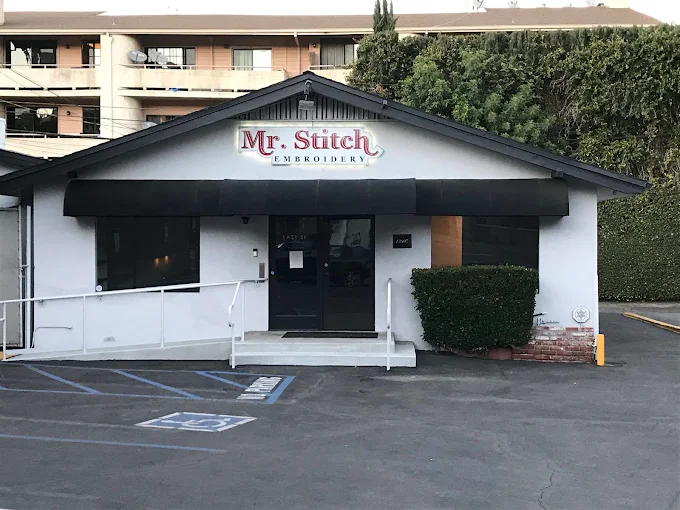
If you are planning a custom apparel order, one of the first questions is usually the same: Should I use embroidery, screen printing, or direct-to-film printing? We hear this a lot at our Sherman Oaks shop, and there really is not one answer that works for every order.
The right choice comes down to what you are decorating, how many pieces you need, what the artwork looks like, and how you want the finished piece to feel. Here is the simple version before we get into the details.
Embroidery vs. Screen Printing vs. DTF at a Glance
If you are new to custom apparel, this is an easy way to think about the three methods.
Method | Usually a Good Fit For | Finished Look | Order Minimum |
Embroidery | Hats, polos, jackets, workwear, names, and logos | Stitched and textured | Single pieces through larger orders |
Screen Printing | T-shirts, hoodies, and larger runs using the same design | Flat ink printed onto the garment | 24 pieces |
DTF | Detailed, multicolor artwork and smaller orders | Heat-applied printed design | No minimum |
Think of this as a starting point, not a rulebook. The actual garment and artwork can change which option makes the most sense.
What Does Each Method Actually Look Like?
Embroidery
Embroidery uses thread to stitch the design directly into the item. You can actually see and feel the texture, which is why it works especially well for logos, names, hats, polos, jackets and uniforms.
The tradeoff is that the thread has physical limits. Very small lettering, thin lines or a lot of detail packed into a small space may need to be adjusted before we stitch it.
If embroidery is the direction you are considering, you can see more through our custom embroidery services in Los Angeles.
Screen Printing
Screen printing puts ink directly onto the garment. It is a strong option when you have the same design going across a larger group of shirts, hoodies or similar apparel.
At Mr. Stitch, screen printing starts at 24 pieces. So if you only need one shirt or a small handful, this usually will not be the first method we point you toward.
Direct-to-Film (DTF)
DTF starts with your artwork printed onto a transfer film and then applied to the garment with heat. It is useful when the design has a lot of color, finer printed detail, or when you only need a small number of pieces.
At Mr. Stitch, DTF has no order minimum, and our DTF service does not have a color limit. That gives us more flexibility for smaller orders and multicolor artwork.
You can see examples on our Direct to Film service.
How Do I Know Which One Is Right for My Order?
When someone comes into the shop unsure which method to use, these are the things I would look at first.
1. How Many Pieces Do You Need?
If you only have one item, embroidery or DTF may both be possible. Embroidery can work for individual pieces as well as larger orders.
Screen printing at Mr. Stitch starts at 24 pieces, so it makes more sense once you are working with a larger group of garments using the same design.
DTF has no minimum here, which makes it especially useful when you have a smaller Los Angeles apparel order or simply do not need 24 pieces.
2. What Does Your Artwork Look Like?
If your artwork has small lettering, thin lines or a lot of tiny details, embroidery may need a little adjustment. Sometimes we can make the design larger; other times simplifying one or two elements is enough.
Screen printing can handle plenty of graphic detail, but the design still needs to work with the finished size and the way the colors are separated for printing.
DTF gives us more room when the artwork depends on multiple colors, gradients or finer printed details that would be difficult to reproduce cleanly with thread.
If you are thinking about embroidery, our guide to common embroidery design mistakes explains why size, lettering and detail matter.
3. What Are We Decorating?
A hat, polo, T-shirt and jacket are very different surfaces, so the item itself matters just as much as the artwork. A method that looks great on one garment may not be the best choice for another.
Embroidery is often a natural fit for hats, polos and jackets. Screen printing is commonly used for T-shirts and hoodies. DTF can work well across many apparel types when a heat-applied print fits the garment and design.
This is why I would rather look at the actual garment and artwork together than tell you that one fabric is always the “best” choice.
4. How Do You Want the Finished Piece to Look?
Embroidery has visible thread and texture. Screen printing is flatter because the artwork is printed in ink. DTF is also a printed look, but the transfer sits on the garment differently from screen-printed ink.
If you are picturing a small stitched logo on a polo, that points us in a very different direction from a large full-color graphic across the front of a T-shirt. Sometimes the look you already have in mind makes the decision pretty easy.
5. How Will the Item Be Worn and Cared For?
Embroidery is a strong option for items that will see regular wear because the design is stitched directly into the garment. That is one reason we often use it for uniforms, workwear, hats and jackets.
Screen printing and DTF can also hold up well when they are produced and cared for properly. I would follow the care instructions for the actual garment and decoration method rather than assume the same washing routine works for every piece.
Still Not Sure? Start Here
If you just want the short version, this is how I would narrow it down:
Choose embroidery when you want a stitched, textured look for a logo, name, hat, polo, jacket or similar item.
Choose screen printing when you have at least 24 pieces and want the same printed design across a larger apparel order.
Choose DTF when you have detailed or multicolor artwork, need fewer pieces, or want a printed option without a minimum order.
These are good starting points, but they are not hard rules. If you bring us the garment and artwork, we can usually narrow the options down pretty quickly.
See the Difference in Finished Work
You do not need to know the technical side before you come in. Start with what you want to decorate, how many pieces you need, and what you want the finished design to look like. From there, we can help you decide which method makes the most sense.
If you are local to Los Angeles, you can also stop by our Sherman Oaks shop with the item or artwork. To get a feel for the stitched side of our work first, browse our embroidery work.

Comments